Friday, April 20, 2012

Hand of Fire: The Comics Art of Jack Kirby

I was talking with one of my colleagues at the PCA conference last week when he told me how fortunate we were, as comics critics, to have two fantastic books come out in the same year. One of the two books he praised so fulsomely was Charles Hatfield's Hand of Fire: The Comics Art of Jack Kirby. I won't get into the other book except to assure you it was not mine. It was probably yours.

Anyway, my colleague's praise dwelt especially on Charles's prose, to which the adjective "soaring" was applied, and I am always interested in learning from good prose. So that night while we all had dinner, I logged on to Amazon and lo and behold there was a kindle edition for one fourth the price of the hardback. I am only halfway through the book right now, but it provokes a lot of reaction and I want to get some of that down now before I forget it in the second half.

Academics know better than to call anything "definitive", but if we think of definitive instead as a scale of increasing definitiveness, then Charles's book is positioned to be pretty far along that scale. And I was struck by this because, of course, Kirby is dead. That is, his career is entirely and "definitively" over. This is in contrast to, say, Alan Moore or Grant Morrison, who have also been the subjects of single-author monograms recently. No matter how good Marc's book is, or Annalisa Di Liddo's Alan Moore: Comics as Performance, Fiction as Scalpel, Moore and Morrison are still working, still creating, and in ten or twenty years someone else is going to put out a book that is informed by those authors' entire body of work, instead of "just" a few decades of it, and Marc or Annalisa's take on these authors will no longer be "definitive". Not that either author expects it to be, but as authors and scholars we do hope our take on a subject demonstrates staying power and longevity.

Charles, however, is writing from a more traditional lit crit vantage point: that is, his subject is dead. Like Shakespeare or Chaucer. But unlike those two subjects, the subject of Jack Kirby is still fresh in academic circles. Indeed, this is the first book length academic treatment of Kirby. And god knows we needed it. But when you add in these facts -- that Charles can write about Kirby's career as a totality rather than as a work in progress, and that Charles is basically writing in a field that is sparsely planted -- what we see is that Hand of Fire is positioned to be the definitive analysis of Jack Kirby for, oh, one academic generation. That is, until one of our current students, someone entering grad school in the Fall, decides to write a better book sometime around 2025.

Provided, of course, that the book does not suck. And it does not. There are a lot of things for me, personally, to like about this book. Let's get to a couple of them.

Hand of Fire is a big sloppy wet kiss to all of us who think that the author is still relevant. One of Charles's arguments -- and there are several -- is that Kirby's life experience, the shape of his career and the conditions under which he worked, had a huge influence over the art and stories he produced. Charles spends plenty of time doing textual analysis of Kirby's pages, looking at how they work and what they say, but he always does it in the context of the argument that these pages are expressions of Kirby's values, values shaped by very real forces which can be traced and outlined. I'm a historicist by training and this kind of argument goes a very long way with me. I'm not arguing that we can know what Kirby "meant" with any individual page, but I agree that we can come to a better understanding of these pages if we know where Kirby was at, personally, financially, and in a literary sense, when he made them.

Speaking of theory, Charles spends a lot of time writing about semiotics in this book, and that's one of the reasons I really like it. As the study of signs, semiotics is a natural partner to comics analysis and I am ashamed to admit I don't know as much about it as I should. But Charles shows a keen awareness of his reading audience when he walks us through semiotic theory, and an awareness of the audience is no less refreshing in a scholar's second book than it is in a freshman essay. Most of my academic life is spent teaching, and when Charles walks us through some of his classroom experiments teaching semiotics to his students, this is nourishing food to a starving man. It makes the book useful beyond its title. If Charles had "only" written an informed, articulate, and thorough examination of Kirby's art, that would still have been damn impressive. But it is also a practical handbook on how to teach semiotics theory in the classroom and how to put it into practice on the page. The first book was totally necessary; the second is an exciting surprise.

This book also surprises in its occasionally personal nature. Frankly, I did not expect Charles to have as clearly audible a voice as he has in this book. But I am glad it is there. In the course of reading, I have learned that Kamandi, Last Boy on Earth is Charles's favorite Kirby comic, one which he read as a child. I have learned that Charles really doesn't like modern superhero comics in the "realistic" mode, most especially the art of Alex Ross, which Charles targets for special disdain. An emphasis on the detailed heroic form, on the posed "picture" instead of on narrative drawing, has taken the life and drama out of the genre, he argues. I wonder what he would think of something like All-Star Superman, where Quitely's art definitely falls under the category of "hyper-detailed" without -- at least in my opinion -- sacrificing narrative power.

I'm only halfway through Hand of Fire. But this is a start, and as you can see, it has given me a lot to think about. Which is a good thing in and of itself.

My El Guapo

It's been a long time between updates here, and much has happened. While I am no less busy now than I have been, I find I have an increasing desire to write about what is on my mind, and blog topics have begun to backfill in my brain.

First, the big news: I begin work as a tenure-track Assistant Professor at the College of Coastal Georgia in the Fall. There's much to say about this felicitous turn of events, but for now I have to limit myself to, "The book worked." Because I had no illusions that I would sell tremendous quantities of Superheroes of the Round Table (168 at last count); I wrote that book to get a job.

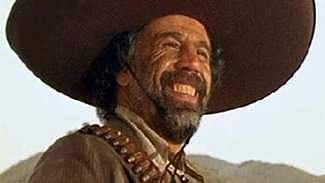
But let's get to the real topic of this post: a big hairy guy who's out to kill us. Yes, I am talking about El Guapo. No, not that El Guapo, the one who got his legs blown off by a missile. I mean this El Guapo:
Lucky Day: I suppose you could say that everyone has an El Guapo. For some, shyness may be an El Guapo. For others, lack of education may be an El Guapo. But for us, El Guapo is a large ugly man who wants to kill us!

I don't think shyness is my El Guapo. And certainly a lack of education is not my El Guapo. For the people of Santa Poco, their El Guapo just happened to be the actual El Guapo. My El Guapo is Dr. Marc Singer.

Because Marc is neither ugly nor especially hairy, some explanation may be in order. I basically have a huge inferiority complex and Marc -- who is a genuinely swell guy and who is probably reading this -- has always been that guy who was smarter, funnier, more successful, and just better read than I am. And I have a deep and long lasting envy of the man. I suppose I could claim envy is my El Guapo but I can't think of anyone else I actually envy. Sorry, Marc. You're it.

What this means is that in my darkest moments -- and we all have them -- I bludgeon myself with the firm conviction that there are always going to be people who make me feel stupid. (I can admit to fears of failure now, when I have landed a good job.) Fortunately, Marc is such a stand up guy -- as you would expect my El Guapo to be -- that he remains always the gentleman and, in my brightest moments, I'm able to turn that envy into a motivating desire to succeed that makes me sometimes smarter and more articulate than I otherwise have any right to be.

All of which has led me to reconsider Geoff Klock's book How to Read Superheroes and Why. Now, this is a really well written book and a fun read for any fan of superhero comics because Geoff is wide ranging in his subject matter and the authors and characters he deals with. Where else are you going to read an academic book that analyzes WildCATS vs. Aliens? Nowhere else.

But although it is engagingly written, diverse in its material and ambitious in its scope, I have always kind of relegated the book to "Interesting but..." status because I disagreed with the fundamental theoretical foundation of the book, which is Harold Bloom's Anxiety of Influence argument. And if you are following along, you now see where this is going.

Bloom approaches literature with a (modified) Freudian perspective and argues that authors are essentially trying to one-up or out-do their artistic "fathers", whoever that might be. So, for example, Shakespeare's early career can best be understood -- Bloom argues -- by seeing it as Shakespeare's effort to surpass or break free of Marlowe. But Marlowe died young, freeing Shakespeare from his primary source of artistic anxiety, and this resulted in the more experimental and masterful Shakespeare we eventually got. In other words, Marlowe was Shakespeare's El Guapo.

Looking back on my own personal experiences, which are of course idiosyncratic and should not be extrapolated across a discipline, I have to admit I have felt my own "anxiety of influence" and, well, Bloom and Klock might be on to something. Academics are already well aware of the foolishness of trying to apply one theoretical lens to all texts in all situations, so I don't really need to caution against doing that, but taken in some moderation, seasoned with a recognition that influences are multiple, across the inner self and the outer social one, it seems equally silly to dismiss the anxiety a thinker feels because he has role models who are So Damn Smart.

Wednesday, October 12, 2011

The BAMF Podcast

Mike Lafferty, good friend and drunkard, hosted a podcast last evening and we had a couple of wonderful co-hosts including Green Ronin freelancer, political science professor, and cynic Chris McGlothlin, and IDW veteran and comic creator and game designer Dan Taylor.

I learned a lot, as I always do at these round tables. And we shared our thoughts on the latest round of DC comics. Both Dan and Chris had read far more of them than I had, but we still managed to find some gems and some duds.


Wednesday, October 5, 2011

The Book is Out

I am very pleased to note that my first academic book, "Superheroes of the Round Table: Comics Connections to Medieval and Renaissance Literature", is now out. It is published by McFarland, and went to print last week. I got a stack of ten in the mail today.

McFarland assures me an electronic version of the book will be available through Amazon, but there is no sign of it yet. In fact, Amazon still reports the book as coming out in January. But interested parties can buy directly from McFarland. When the digital copy comes out, I will spread the word.

Thursday, September 29, 2011

ENG 12S: Comics go to War

So just to prove you can't keep a good War down, my summer course which was cancelled at the last minute lives again as a last-minute addition to a Fall quarter with too many students and not enough courses.

The final reading list is a very painful compromise.

Captain America Comics (1941)
Truth: Red, White & Black
Blazing Combat!
Blackhawk: Blood & Iron
Enemy Ace
It Was a War of the Trenches
The 'Nam
Safe Area Gorazde
Unknown Soldier: Haunted House

The great tragedy is Fax from Sarajevo, which is out of print and not in Dark Horse's digital comics library. With 60 students, I can't rely on a single personal copy put on reserve. UCR's Eaton Collection is very hit-or-miss with war comics, and it's usually miss. We have one issue of Two-Fisted Tales, for example. I wanted to at least look at Haunted Tank, but it and the other DC collections are all out of print; even Enemy Ace is going to be a real gamble, and it is the least popular of all those books.

But my students will be able to pick another war comic of their choice for their research paper, so there is some flexibility in there and I am sure that someone will do the other great war comics which we don't have access to in large quantities, or cannot get in time for a class which started one week into the quarter.

Tip of the Hat to Corey Creekmur, who recommended War of the Trenches and Blazing Combat. My old friend Dan Brophy reminded me of Chaykin's Blackhawk, and Nicole suggested Truth, which is especially useful as it can be read through Marvel's Digital Comics library, which means we can read it right away and we don't have to worry about ordering from Amazon.

Saturday, July 16, 2011

Vigilance Press Nominated for Ennie Award

For a couple of years now I have been publishing game material through the fine folks at Vigilance Press, who have this week been nominated for "Fan Favorite Publisher".

Vote Here

I first wrote to Charles Rice, the captain of this ship, when I was looking for a publisher to help with Arthur Lives! I chose Chuck because of all the books he had done over the years; he has a great love of the hobby, and he's prolific as hell. I knew I didn't want to deal with the business end of game publishing and I knew I could trust him. He took a chance and gave AL a home; we have put out three books for that game and I remain very proud of all of them. I would love to do more, as Arthur and modern magic are personal faves of mine. But, more importantly, Charles' reputation has been validated time and again since that first book. He's super supportive, knows what works, and is as honest as the day is long.

Vote Here!

I was tinkering on the next book in the AL saga when Chuck asked me if I had anything I wanted to write for ICONS. It took me 24 hours to realize that I could finally bring to print a book I had wanted to do for something like ten years, the Field Guide to Superheroes. We've done three of the four volumes and, once again, Chuck, together with Dan House and Mike Lafferty and Jessica, have allowed me to complete a long time project. It looks phenomenal and reception has been pretty positive. My biggest challenge is that the characters Dan has made up all look cooler than the ones I have made up; if that's my biggest problem I will take that any day.

Vote Here!

In between all of this, Mike has graciously invited me in to participate in various podcasts, in which we talk to authors and artists. I can talk about gaming and comics all day long, but in addition to plugging Vigilance books we've also gotten to talk to people like writers Ron Marz and Dan Abnett, or up and coming artist Ulises Farinas. It's wonderful to be part of a group that has such a positive reputation and which is embraced by fans. I am wise enough to know that my few books have nothing to do with this fact. Mike, Chuck, Steve Perrin and the rest far overshadow me through their creation of a complete World at War filled with super-Nazis and their lantern-jawed foes. But it is righteous company, and I am fortunate to be counted among them.

Stay Vigilant, everyone!

Saturday, July 2, 2011

Interview with Ron Marz

Last week I got together with Mike Lafferty of Vigilance Press to do an interview with Ron Marz. Ron is a distinguished writer and editor whose comics cred includes many, many books including the last 70+ issues of Witchblade, some of my favorite CrossGen titles (Mystic and Sojourn), a long run on Green Lantern (in which he helped create the character of Kyle Rayner), and on and on.

Ron very graciously allowed us to ask not only about his recent work at Top Cow, but also his experiences at CrossGen and the fact that he wrote the scene which Gail Simone's infamous "Women in Refrigerators" tagline is named after. I learned a lot about writing and the creative process, and found Ron's thoughts on DC's relaunch to be quite interesting. He's writing their new Voodoo book, by the way.

You can listen to the interview here.